Precursor to the Museum

Athlone — Music & Radio Heritage

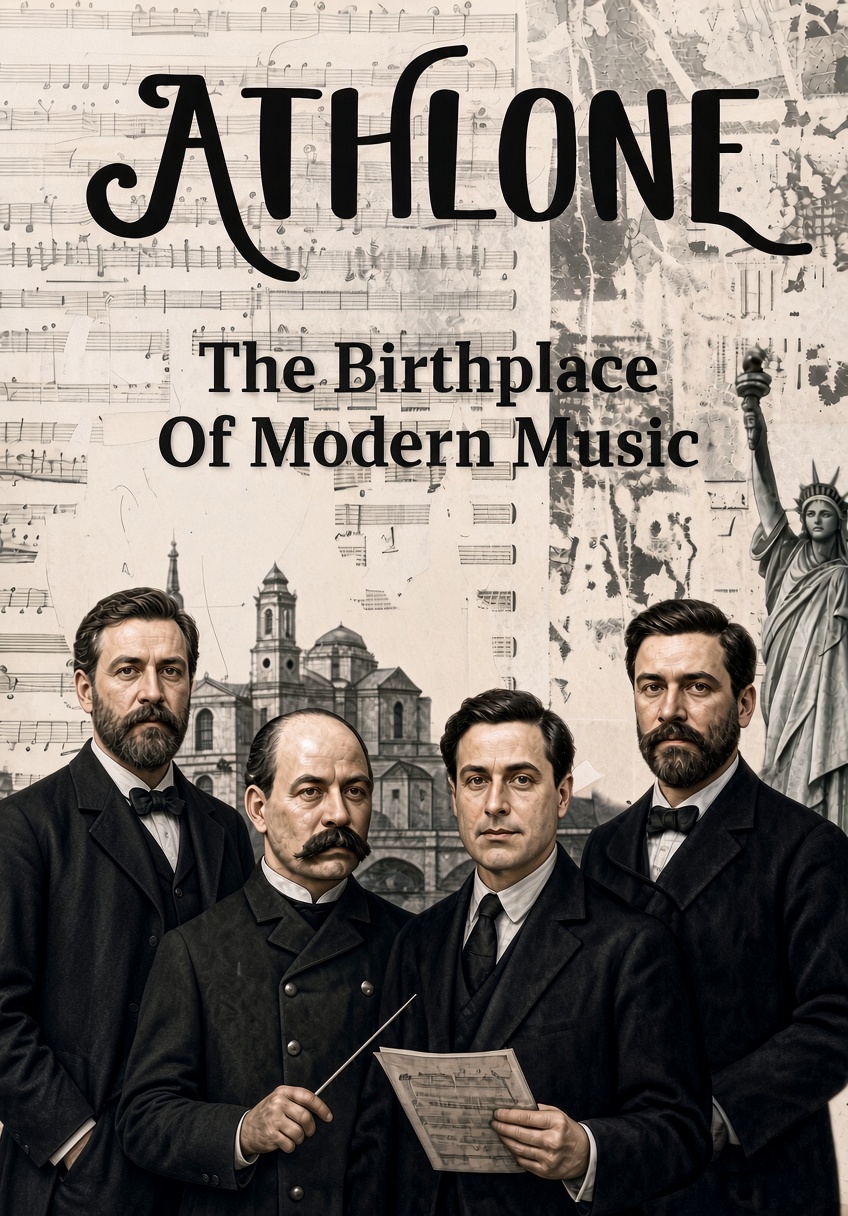
From the bands of the early 19th century to the high-power transmitter that carried Ireland’s voice to the world, Athlone holds a unique place in the story of Irish music and broadcasting.

A Storied Legacy

Athlone’s musical identity was forged across more than two centuries of bandmasters, tenors, pipers, societies and broadcasters. The figures and institutions below form the core of the heritage the future museum will preserve and interpret.

Societies & Groups

The Athlone Pipers

A Century of Tradition

From the Clan Uisneach Pipe Band of the late 19th and early 20th centuries to the modern Athlone Town Pipe Band, the pipes have been a continuous thread in the town’s cultural life. Members included Eugene Daly, the Titanic piper.

Learn More

Athlone Musical Society

Ireland’s Oldest Musical Society

Co-founded by Henry Foy in 1902, the society is the longest continuously active musical society in Ireland. It has staged productions for well over a century and remains a cornerstone of the town’s performing-arts tradition.

Athlone Choral Society

A Community in Harmony

For decades the Athlone Choral Society has brought together voices from across the community, performing classical and contemporary repertoire and enriching the town’s cultural calendar.

Comhaltas Ceoltóirí Éireann

Guardians of Tradition

The local branch of Comhaltas has long been central to the transmission of traditional Irish music, song and dance in Athlone, supporting sessions, classes and major festivals including the 1953 Fleadh Cheoil na hÉireann hosted in the town.

A Timeline of Music & Broadcasting

Key moments that shaped Athlone’s place in Irish and international musical history, from the Napoleonic era to the high-power radio age.

1796

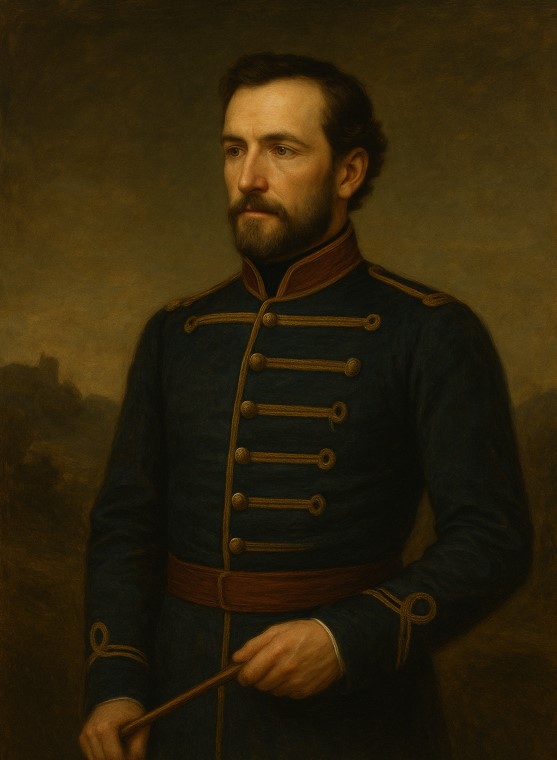
Patrick Keating is born. A future Waterloo veteran, he will become the father of Athlone’s 19th-century musical renaissance.

1820s

Keating returns to Athlone and begins forming and training local bands, sparking a cultural revival in a post-Napoleonic garrison town.

1843

Keating’s band performs at Daniel O’Connell’s Monster Meeting at Summerhill, their music a public voice for political change.

Late 1840s

Amid the Great Famine, Keating mentors a young Patrick Sarsfield Gilmore in Athlone, passing on musical skill and political ideals.

1849

Gilmore emigrates to America, carrying Athlone’s band tradition to Boston and beyond.

1861–1863

Gilmore and his band serve with the Union Army. In 1863 he writes “When Johnny Comes Marching Home.”

1869

Gilmore organises the National Peace Jubilee in Boston — over 1,000 instrumentalists and a choir of 10,000 — to mark the end of the Civil War.

Late 1870s

Michael Kilkelly, mentored by Keating, leads the Athlone Brass Band at land evictions during the Land War, using music as public resistance.

1880 & 1886

Gilmore’s band performs for Charles Stewart Parnell in New York and at the dedication of the Statue of Liberty.

Early 1890s

As choirmaster, Michael Kilkelly recognises the extraordinary talent of a young John McCormack and gives him early training.

1902

Henry Foy co-founds the Athlone Musical Society. The same year John McCormack wins gold at the Dublin Feis Ceoil.

1912

Athlone piper Eugene Daly and local resident Bertha Mulvihill survive the sinking of the Titanic. Daly had played his uilleann pipes for fellow passengers.

1919

Henry Foy forms the Harry Foy Jazz Quartette — widely regarded as Ireland’s first jazz band — while McCormack is at the height of international fame.

1922–1923

The Irish Civil War fractures community life; many local bands fall silent.

1926

Ireland’s first national radio service, 2RN, begins broadcasting from Dublin. Athlone will soon become central to its expansion.

1932

The new high-power Athlone transmitter is used to broadcast the Eucharistic Congress. McCormack’s performance of “Panis Angelicus” is heard nationwide.

6 February 1933

Éamon de Valera officially opens the Athlone transmitting station, calling it “a new bridge of Athlone” linking Ireland with its diaspora.

1938 onwards

The service is known as Radio Éireann. Athlone’s transmitter becomes synonymous with Irish radio across Europe.

1953

Athlone hosts Fleadh Cheoil na hÉireann, affirming its status as a centre of traditional music.

Radio Heritage

Athlone occupies a singular place in the history of Irish broadcasting. From the first national service to the high-power Moydrum transmitter that carried the nation’s voice across Europe, the town was at the centre of Ireland’s radio age.

The Athlone Transmitting Station, Moydrum

Built to give the young Irish Free State nationwide and international reach, the Athlone transmitter entered temporary service for the 1932 Eucharistic Congress and was officially opened on 6 February 1933 by Taoiseach Éamon de Valera. He described it as “Droichead nua Átha Luain” — a new bridge of Athlone — linking the Irish at home with those abroad.

Equipped first with a Marconi transmitter (later upgraded) and a T-aerial suspended between two tall masts, the station operated for decades as the primary medium-wave outlet for Radio Athlone and then Radio Éireann. Its signal was so well known that many European valve radios carried an “Athlone” marking on the dial. The original transmitters remain on site; the location has long been proposed as the natural home for a broadcasting and music heritage museum.

2RN to Radio Éireann

1926 – 1930s

2RN, Ireland’s first national radio station, began in Dublin in 1926. The Athlone high-power site transformed coverage, making the service truly national and audible far beyond Ireland’s shores.

McCormack & the Congress

1932

John McCormack’s performance at the Eucharistic Congress in Dublin was broadcast via the new Athlone transmitter, uniting the country in a single shared listening experience and bringing the town’s most famous musical son full circle.

A Site of National Memory

Heritage Potential

Successive generations of transmission equipment still stand at Moydrum. Feasibility studies and community campaigns have repeatedly identified the site as ideal for a museum interpreting both music and the technology of radio.

Explore the Athlone Music Trail

A self-guided walk through the places where Athlone’s musical history was made. An expanded interactive trail with audio interpretation is a core goal of the museum project.

Stop 01

John McCormack’s Birthplace

The Bawn, Irishtown. A plaque marks the site where the great tenor was born in 1884. From local choir to the world’s concert stages, his journey began here.

Stop 02

Dean Crowe Theatre

Chapel Street. Long associated with the Athlone Musical Society (founded 1902) and a continuing home for performance in the town.

Stop 03

Site of The Crescent Ballroom

St Mary’s Place. The legendary dancehall that hosted the showband era and packed houses for local and national acts in the mid-20th century.

Stop 04

Moydrum Transmitter Site

Moydrum. The physical heart of Ireland’s high-power radio service from the 1930s. The surviving equipment and landscape form a unique industrial-heritage asset.

Help Shape the Interactive Trail

Our Vision: The Athlone Music & Radio Museum

This layered history of music and broadcasting deserves a permanent home. We are working toward a dedicated museum that will preserve the stories, instruments, recordings and technology of Athlone’s contribution to Irish culture and to the wider world.

1

Preserve the Legacy

Create a secure archive for documents, photographs, instruments, recordings and oral histories relating to Athlone’s musicians and broadcasters.

2

Interpret Music & Radio

Present the twin stories of performance and transmission — from 19th-century bands to the Marconi-era transmitter — in an accessible, scholarly and engaging way.

3

Inspire & Educate

Offer learning programmes, research facilities and public events that connect new generations with this heritage.

4

Strengthen the Town

Establish a cultural landmark that draws visitors, supports local research, and anchors Athlone’s identity as a place of music and radio history.

This vision can only become reality with community support and partnership.

Get Involved & Share Your Story

Your knowledge, photographs, recordings and memories are essential to building a complete picture of Athlone’s musical and radio past. Register your interest, contribute material, or offer support for the museum project using the form below.

About the Project

The Athlone Music Heritage Project is a community-led initiative founded by local historians, musicians and enthusiasts. Our mission is to research, preserve and celebrate the musical and broadcasting legacy of Athlone. This website is the first public expression of that work and the digital precursor to a permanent Music & Radio Museum.

Content has been compiled from local archives, contemporary newspapers, published scholarship and, above all, the stories and material shared by the people of Athlone and the wider region.

Project Team

  • Leo Nolan — Lead Historian & Researcher
  • Seamus McKenna — Community Outreach
  • Tadhg Kelleher — Web Development & Digital Archiving

Contact Us

We welcome enquiries, contributions of material, and expressions of interest in the museum project.

Email: tadhgkelleher@gmail.com

Privacy Policy

Last Updated: 14 September 2025

The Athlone Music Heritage Project is committed to protecting your privacy. This policy explains how we collect, use and safeguard information when you visit this site.

Information We Collect

  • Personal Data: Name and email address you voluntarily provide through the “Get Involved” form.
  • Derivative Data: Standard server logs (IP address, browser type, pages viewed) collected automatically.

Use of Your Information

  • To respond to enquiries and support the project.
  • To send project updates if you opt in.
  • To produce anonymous statistical analysis for internal use.

Third-Party Services

Google Forms: Submissions are stored on Google’s servers and subject to Google’s Privacy Policy.

Contact

Questions about this policy may be directed via the details on our Contact page.